1. Overview
Osstem Hiossen implant systems are widely used across US and EU clinics due to their standardized platform geometry and broad component ecosystem. Healing abutment caps, also called healing caps or healing cuffs, are transitional components placed after implant insertion to shape the soft tissue before final abutment placement. This guide covers mini platform and regular platform healing cap dimensions, selection criteria, compliance, and B2B procurement considerations.
2. Platform Basics: Mini vs Regular
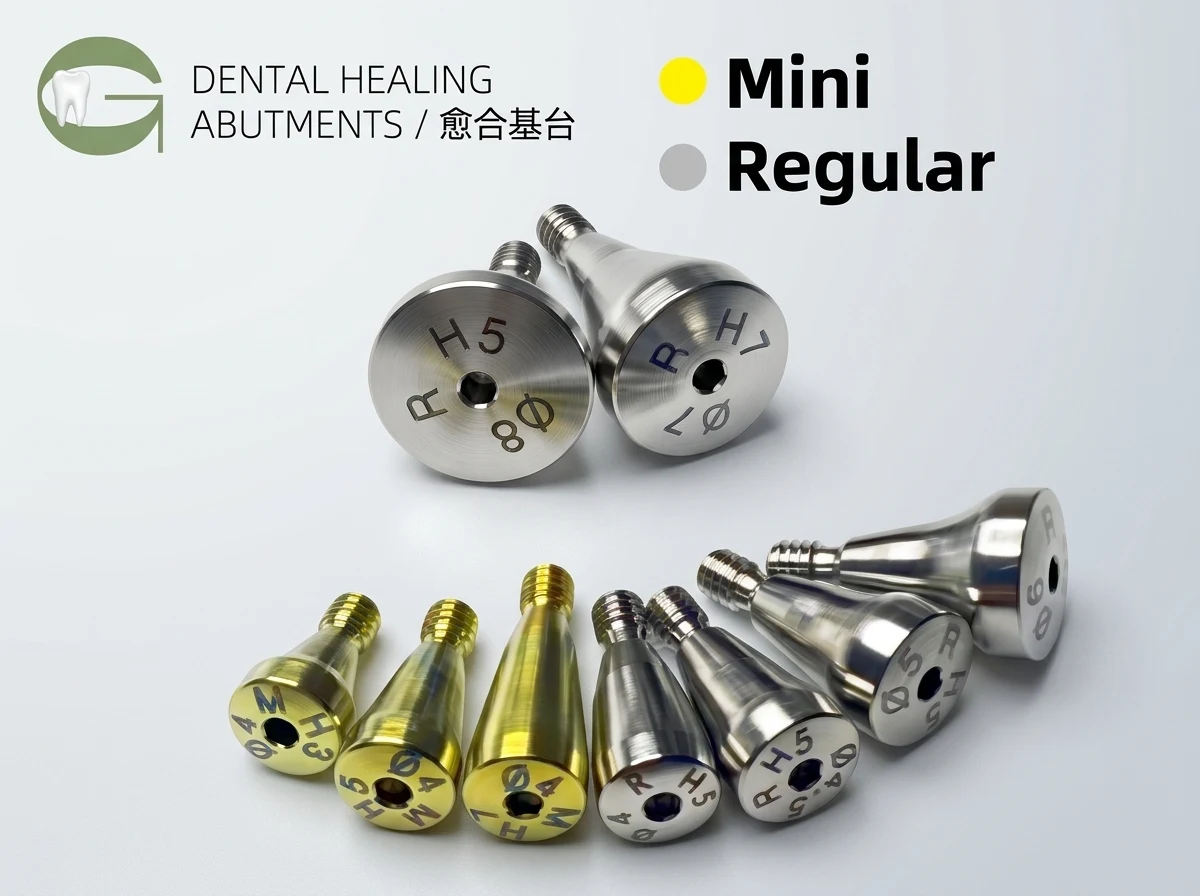
Osstem Hiossen commonly uses two platform categories that determine healing cap compatibility:
-
Mini platform: typically associated with narrower implant diameters, often 3.5mm class or smaller. Healing caps for mini platforms have a smaller base diameter to match the implant connection.
-
Regular platform: associated with standard diameter implants, often 4.0mm and above. Regular platform healing caps have a wider base and are the most commonly stocked variant.
Using the correct platform is critical. A healing cap that does not match the implant connection may not seat fully, can create soft tissue irritation, and may complicate impression taking or final restoration.
3. Key Dimensions to Specify
When ordering healing abutment caps, B2B buyers should verify four dimensions:
-
Base diameter: the lower portion that engages with the implant platform. Mini and regular platforms differ here.
-
Cuff height: the portion that emerges through the gingiva. Common heights range from 3mm to 7mm. Shorter cuffs are used in shallow tissue; taller cuffs for thicker gingiva or deeper restorative scenarios.
-
Collar diameter: the visible rounded top of the healing cap. This determines the size of the soft tissue niche formed around the future abutment.
-
Connection type: internal hex or other interface geometry specific to Osstem Hiossen systems. Compatibility must match the implant line (e.g., TS, SS, or equivalent platforms).
Procurement teams should request dimension drawings from suppliers to confirm these values before bulk orders. Dimension mismatches are a common cause of returns in component supply chains.
4. Material and Compliance
Healing abutment caps are commonly manufactured from titanium or titanium alloy, which is autoclavable and reusable under proper reprocessing protocols. Single-use polymer variants also exist for cost-sensitive workflows.
For B2B buyers in the US and EU, key compliance points include:
-
ISO 13485 certification for the manufacturing facility.
-
Conformity with applicable device classification requirements in the target market.
-
Material traceability documentation for titanium components.
-
Autoclavable validation if reusable components are supplied pre-sterilized.
Reprocessing instructions should accompany reusable healing caps. Clinics must follow validated cleaning, packaging, and sterilization cycles to maintain infection control standards.
5. Selection Guide for Clinics and Labs
Practical selection criteria include:
-
Implant diameter: match mini platform to narrow implants, regular platform to standard implants.
-
Gingival thickness: choose cuff height based on tissue depth. A healing cap that is too short will be submerged; too tall will cause irritation and poor contouring.
-
Restorative plan: anterior cases may require more customized soft tissue shaping, while posterior cases often use standard cuff heights.
-
Inventory strategy: clinics typically stock regular platform caps in 3mm, 5mm, and 7mm heights. Mini platform variants are often ordered on demand or kept in smaller quantities.
6. B2B Procurement Considerations
When sourcing healing abutment caps at scale, distributors and clinic groups should evaluate:
-
MOQ (minimum order quantity): many suppliers offer tiered pricing. Small clinics may need low MOQ options, while distributors benefit from bulk pricing.
-
Tiered pricing: price per unit typically decreases as order volume increases. Request a price list with quantity breaks.
-
Packaging: components are often packed individually or in sets. Verify packaging integrity for sterile products.
-
Lead time: domestic stock items may ship within 1-3 business days; custom or imported components may take 2-4 weeks.
7. Shipping and Customs for US and EU
For cross-border B2B orders, DDP (Delivered Duty Paid) terms simplify procurement by including duties, taxes, and customs clearance in the delivered price. Key points:
-
DDP shipping reduces administrative burden for buyers, as the supplier handles customs documentation.
-
Required documents typically include commercial invoice, packing list, certificate of origin, and compliance declarations.
-
US imports require proper HS classification and FDA-related documentation where applicable.
-
EU imports require CE-related documentation and compliance with EU medical device regulations.
-
Delivery timelines: DDP shipments to US and EU destinations typically take 5-10 business days after dispatch, depending on origin and customs processing.
Buyers should confirm whether DDP pricing includes all import fees to avoid unexpected landed costs.
8. Quality and Supplier Evaluation
Before committing to a bulk supplier, consider:
-
Requesting sample units to verify fit and finish.
-
Checking for consistent thread geometry and surface quality.
-
Confirming that the supplier can provide ISO 13485 certificates and product traceability.
-
Evaluating return policies for dimension mismatches or defective units.
Reliable suppliers will provide detailed product specifications and compatibility charts, reducing the risk of ordering errors.
9. Sourcing Note
For clinics, labs, and distributors seeking Osstem Hiossen compatible healing abutment caps with clear dimension specifications, ISO-aligned documentation, and DDP shipping to US and EU destinations, Visstoo Dental Supply offers tiered pricing, low MOQ options, and full customs support for B2B orders. Contact the sales team for dimension charts and current lead times.